19 July 2010

Inception

Last night I made the mistake of going to watch Inception, a new film by Christopher Nolan. The verdict:
Complete, utter trash.
It starts as a boring story. It gets more boring by trying to be complicated, it develops into a boring scenario, when it becomes so boring that you have to walk out.

So I did: After an hour or so, I couldn't take it any more and walked out feeling that I had (i) wasted money, (ii) wasted time, and (iii) become irritated by my stupid choice to go see an idiotic film.

But I should have known better. I should have read the New Yorker's review of the film:
Christopher Nolan, the British-born director of “Memento” and of the two most recent Batman movies, appears to believe that if he can do certain things in cinema—especially very complicated things—then he has to do them. But why? To what end? His new movie, “Inception,” is an astonishment, an engineering feat, and, finally, a folly.
He has spent 10 years contemplating the movie and finally came up with total trash.
He has been contemplating the movie for ten years, and as movie technology changed he must have realized that he could do more and more complex things. He wound up overcooking the idea.
If only I had spent 5 minutes looking at the review I would have realized the unfathomable stupidity of the film whose main idea is that we are watching people dreaming about dreaming:
Nolan gives us dreams within dreams (people dream that they’re dreaming); he also stages action within different levels of dreaming—deep, deeper, and deepest, with matching physical movements played out at each level—all of it cut together with trombone-heavy music by Hans Zimmer, which pounds us into near-deafness, if not quite submission.
I would have known that Nolan makes films at the level of Big Brother, for audiences who love watching films in order to kill 2 hours of their time:
Dreams, of course, are a fertile subject for moviemakers. Buñuel created dream sequences in the teasing masterpieces “Belle de Jour” (1967) and “The Discreet Charm of the Bourgeoisie” (1972), but he was not making a hundred-and-sixty-million-dollar thriller. He hardly needed to bother with car chases and gun battles; he was free to give his work the peculiar malign intensity of actual dreams. Buñuel was a surrealist— Nolan is a literal-minded man.
If only I had realized that Nolan was the one who took a wonderful Norwegian film, Insomnia, a 1997 film by Erik Skjoldbjærg, and made it into a Holywood blockbuster in 2002, a very poor immitation of the 1997 original, I would have known that Nolan's films are to be avoided at all costs. But I hadn't relized that Nolan is the same joke of a director who spoiled the Norwegian film.

David Denby, in his review for the New Yorker, concludes thus:
In any case, I would like to plant in Christopher Nolan’s head the thought that he might consider working more simply next time. His way of dodging powerful emotion is beginning to look like a grand-scale version of a puzzle-maker’s obsession with mazes and tropes.
I absolutely agree. However, I'm afraid that as long as there are Big Brother watchers, Nolan's films will keep generating money for him and his sponsors.

17 July 2010

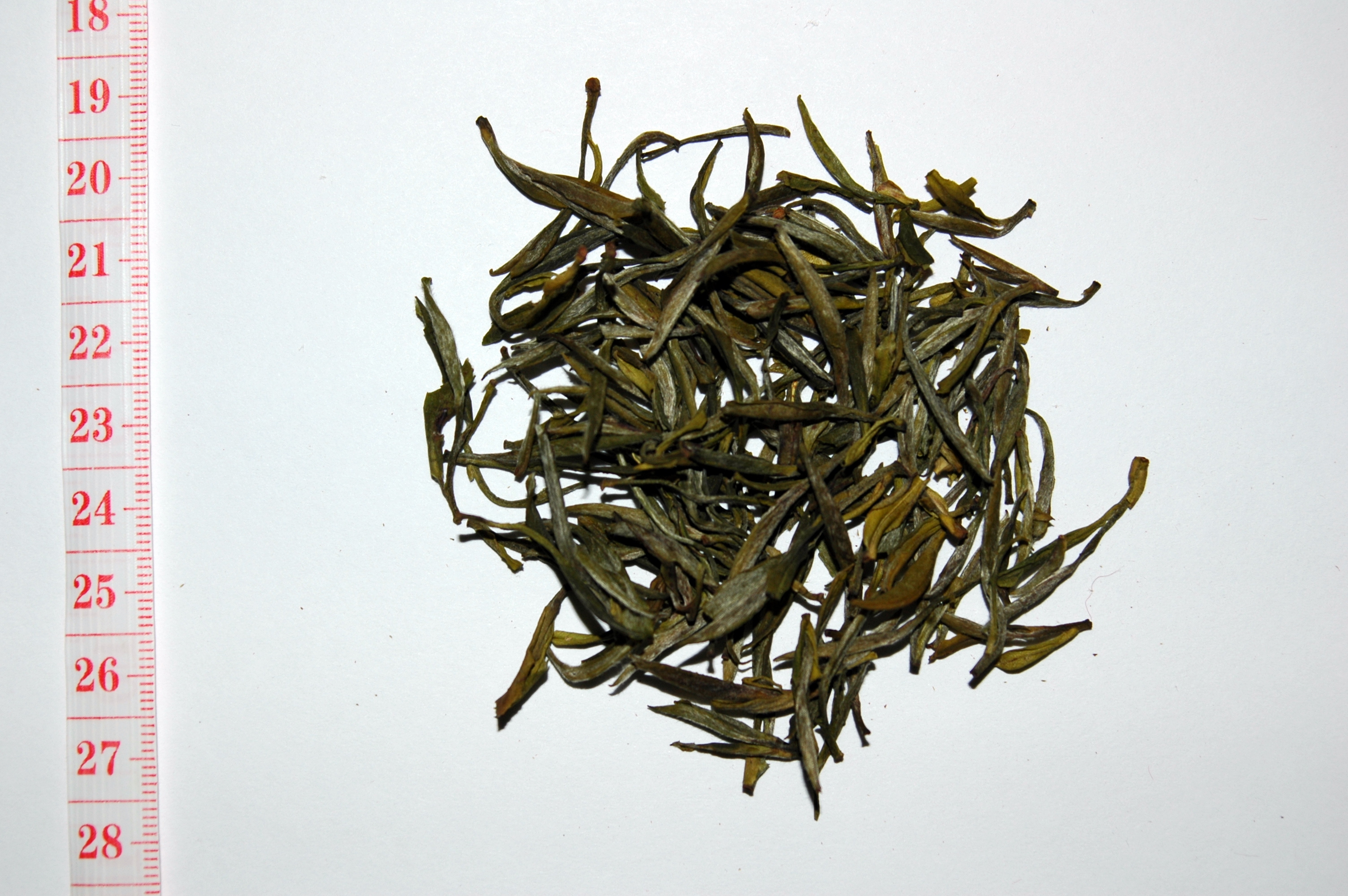
Mao feng tea

I am, at the moment, enjoying a cup of mao feng tea (黄山毛峰), one of the top varieties of Chinese green teas,

 grown in Mount Huang (Huangshan) in the Anhui province of China.


I discovered the mao feng tea thanks to my ex-colleague Yuanhua Feng (who managed to escape from Heriot-Watt university some time ago, and is now professor in the University of Paderborn, Germany) who had given me a box of it a couple of years ago.

The shape of the processed leaves resembles the peak of a mountain. An ancient Chinese legend about the tea goes as follows:
It is said that young scholar and a beautiful woman who worked in a tea plantation were madly in love. One day a local landowner saw the woman and wanting her for his own, seized her and forced her to become her concubine. The woman escaped only to find that the landowner had killed the young scholar. When she found this out, she immediately went to his grave which was located high on a mountainside. She wept uncontrollably until she became the rain, and the young scholar became a tea tree. It is said this is why the area where Huangshan Mao Feng Tea grows is cloudy and humid all year.
As for the meaning of the name "mao feng", and the qualities of the tea, we note that
"Mao" means fluffy, and "Feng" means mountain peaks. Although it is not a scented tea, it has many properties similar to scented tea. The tea liquor has an apricot flavor, and a fragrance like magnolias. No apricot trees or magnolias grow in the area, so it is unknown how Huangshan Mao Feng gets its unique flavors. There is however wild peach trees that grow in close proximity to the tea plants, and that may be the cause. Huangshan Mao Feng Tea drinkers say that the first brewing is fragrant, the second brewing is sweet, and the third brewing is strong. The tea tastes clean and refreshing, and lasts a long time on the tongue.
I agree with the last two sentences.

29 June 2010

The Edinburgh Creationist Group, part II

For part I, see here.

The Edinburgh Creation Group is a group of "pseudo-scientists": see, e.g., the naive, silly, uninformed, statements by Prof. Andy C. McIntosh and Dr. Marc Surtees on Thermodynamics and Feedback Control, respectively.

They seek to inject religious fundamentalist ideas to people. But they do so by abusing science!

At the surface, they may appear to be associated with "charities", such as the Edinburgh City Mission. I was informed that these charities have nothing to do with helping people in need.

Creationism appears with other names also, such as "intelligent design".  Whatever their name may be, two things certain: 
(1) they have nothing to do with science.
(2) they have nothing to do with humanitarianism or benevolence.


24 June 2010

My Einstein and Erdős numbers

Although it's rather silly (who cares? what does it mean? why bother?), I was informed today that my Einstein number is 5 and my Erdős number is 3:

http://www.ams.org/mathscinet/collaborationDistance.html
Takis Konstantopoulos coauthored with Paavo Salminen MR2488533 (2010d:60205)
Paavo Salminen coauthored with Endre Csáki MR0891709 (88k:60145)
Endre Csáki coauthored with Paul Erdős MR0771472 (86f:60086)
Paul Erdős coauthored with Ernst Gabor Straus MR0058863 (15,437d)
Ernst Gabor Straus coauthored with Albert Einstein MR0012947 (7,87j)

It's always amusing to me that people feel the need to attach themselves to someone important in order to feel important themselves. You hear people saying "I have met so and so". Or: "My great-grandfather was an important mathematician". And at times: "God spoke to me last night and gave me a message".

But the silliest thing of all, is the attaching of abbreviations after one's name. For instance,
Prof. Xyie Ziabwi [say...], CBE,  PhD, MSc, BSc, FeFA, FeIAs, FeSS, FeIMA.
The more acronyms someone attaches to one's name, the more important he/she feels. 

Oh, the futile seeking of a bit of fame!

10 June 2010

Mongoose traditions

 behaviourr
http://www.nature.com/nature/journal/v465/n7299/images/465668a-i1.0.jpg


Banded mongoose (Mungos mungo) have been observed to show certain social traditions. Each pup pairs up with an older (escort) mongoose and learn how to imitate them. Two scientists placed an artificial food item (rice and fish contained in a plastic egg) and watched what the escorts did to open the eggs: they held them with their paws and bit into them. Pups observed their escorts and, months later, had learned the technique and could imitate it. Some other escorts did something completely different: they threw the eggs on a hard surface. Well, their pups also learned this technique from their escorts.
-- Nature 465, 668 (10 June 2010)


T H E B O T T O M L I N E

What measure theory is about

It's about counting, but when things get too large.
Put otherwise, it's about addition of positive numbers, but when these numbers are far too many.

The principle of dynamic programming

max_{x,y} [f(x) + g(x,y)] = max_x [f(x) + max_y g(x,y)]

The bottom line

Nuestras horas son minutos cuando esperamos saber y siglos cuando sabemos lo que se puede aprender.
(Our hours are minutes when we wait to learn and centuries when we know what is to be learnt.) --António Machado

Αγεωμέτρητος μηδείς εισίτω.
(Those who do not know geometry may not enter.) --Plato

Sapere Aude! Habe Muth, dich deines eigenen Verstandes zu bedienen!
(Dare to know! Have courage to use your own reason!) --Kant