Showing posts with label Sweden. Show all posts

23 May 2016

Tatoo obsession in Sweden

Swedes have a huge obsession with tatoos:
Tatoos have become so commonplace in Sweden that Stockholm is now believed to be home to the world's most inked population outside of tribal societies. [Source]

I wrote about this in an earlier post because one of the first things I noticed in Sweden was that shops that carry magazines and newspapers have many more publications devoted to tatoos than to news. Sometimes one cannot find newspapers (other than trash tabloids) but there are surely several (sometimes dozens) tatoos magazines always available.  I tested this today at the main airport in Stockholm. I asked, at Pressbyrån, if they have any newspapers. They pointed out Expressen  to me.  I said,  "that's a tabloid,  do you have any regular newspaper?" They pointed out Aftonbladet to me.  I replied that this is also junk press.  "Any serious newspapers?" No.  None.  And yet they had several magazines on tattoo.

It's very hard to find newspapers at the main airport of Stockholm.  As for foreign press,  forget it,  there is none.  But tatoos are everywhere.  There is even a tatoo parlor at the Stockholm airport:
http://www.swedavia.com/arlanda/about-stockholm-arlanda-airport/about-stockholm-arlanda-airport/news/worlds-first-tattoo-studio-at-an-airport/
And they're proud about it: it's the first airport in the world to have a tatoo shop. (Caveat: there's nothing decent to eat at Stockholm airport,  but there's a place where you can get a tatoo.) I guess it's important to some to get their tattoo before they fly.

I observed these peculiarities long time ago.  But I didn't know that Sweden has as many tatoos per capita as in tribal societies.

N.B. See my old  posting on 3 Swedish fetishes:
http://randomprocessed.blogspot.fr/2011/09/three-swedish-fetishes.html?m=0

30 January 2016

Violence in Sweden

There are a lot of things happening in Sweden that makes everyone who is not Swedish feel very uncomfortable.

The most recent of them is the attack to immigrants by about 100 masked people in central Stockholm. Although it appears that Sweden is welcoming immigrants it is rather clear to someone who lives here that a large fraction of people do not like them. The attacks that took place today are not the first. They happen, perhaps at a smaller scale, almost weekly. But it is a policy in Sweden that violence should not be reported. Central Stockholm and Uppsala, as well as many other Swedish towns, are accommodating immigrants from many countries, including Syria, Afghanistan, Romania, etc. One sees them on the streets. You can't go to a supermarket without seeing beggars often staying outside in the cold. Many people "help" them by giving them tips but even this is hard because the Swedish government adopted the policy of discouraging people from using cash, the intention being to force everyone use credit cards. Some beggars are now carrying credit card readers so they can accept credit card donations from people. But many people would rather not see anyone who looks darker than them. And since they cannot express their opinion openly, they put on a mask and beat street people up.

I know some people who work for the Uppsala city council who tell me that the phenomenon of attacking Syrian refuges camps is not uncommon. "I've never heard anything about it", I said. "You won't", they replied, "because the attacks are not reported." Apparently, only when something leaks out one finds out officially. Otherwise, it's hard to know what's going on. A few weeks ago there was this mass sexual attack in Cologne, Germany, from the other side: that is, by migrant people. Someone I know in Uppsala told me, around the beginning of the year, that similar things have been taking place in Sweden. "I can't believe it", I said. Again, the answer was "they are not reported". And, indeed, 2 weeks ago something leaked out. There were sexual attacks, by migrant youths but police did not make the information public. When the BBC found out they questioned the chief of the Swedish police who admitted that information is not released.

It happens both ways. Regardless of whether Swedes attack immigrants or the other way around, one cannot always find out: these attacks often don't make the news. Not by negligence; but by design.

In 2013, the now infamous Stockholm riots took place. A relatively high proportion of immigrants and second-generation immigrant residents, including a substantial number from Somalia, Eritrea, Afghanistan and Iraq instigated a mini-revolution by burning cars, throwing bricks, vandalizing, etc. Somehow, this was thought to be against the image that Sweden is portraying towards the outside world so it was not reported. When it leaked out, police declared it was terrorist groups. Although one may call such acts terrorism, it's not the kind that take place elsewhere. Apparently, the revolting migrants were expressing their frustration for their segregation and attacked innocent, of course, people. Just like in Paris suburbs a few years ago, at a smaller scale. As for segregation, it is rather obvious that many people who don't like typical Swedes are being kept apart. There is a neighborhood in Uppsala, Gottsunda, where they put immigrants. When we first moved to Sweden and were looking to buy a house we were explicitly warned not to go to Gottsunda. Such racist comments I thought existed only in Texas (and had experienced them). But Sweden, in some sense, is even more racist.

Back in 2011, when we had just moved to Sweden, there was this infamous mass killing in Norway by that human monster called Anders Breivik. The day after the killings, several people in Sweden started posting on Swedish newspaper sites, anonymously, their support for Breivik. I remember I got a call from Stockholm and was told to take a look at what they were saying. With the help of Google Translate, I read several of their comments and was appalled and scared. Good to know, however, I thought, that many people around me in Sweden support Breivik and would kill those whom they consider responsible for supporting immigrants. But my thought was quickly overturned: the Swedish newspapers decided to censor the readers' comments by deleting them and by closing their sites for a couple of days. They also created filters and other gadgets so that readers can't post anonymously (and, who knows, censor those who expressed their sympathy for Breivik).

Taking the train to and from Stockholm, one encounters some sad angry youth in neo-Nazi uniforms and tattoos: SS tattoos on their shaved heads. The reaction of passengers is to ignore them. I think they are scared, but I can't tell because they don't discuss it. I met Nazi demonstrations in Uppsala a few times. In 2010 or 11 there was this riot at the center of Uppsala by a bunch of angry young Nazis with pictures of blond men chasing black people. I approached one of them and asked him what's up. He said "we're against immigrants because they steal our jobs". I replied that "I'm an immigrant too and have the job of a professor in the University." I think I was aggressive and the young Nazi got scared. He replied  "it's only black immigrants we don't like. White Europeans are OK." "But I'm American", I said. He looks at me and says "It's OK, Americans are white Europeans." I didn't finish my sentence when a cop approached me and told me to get away.

And then, sometime later, we saw more riots of neo-Nazis, probably from the so-called "sverige demokraterna" party. The funny thing was that they had asked support of Greek Nazis from the equivalent "golden dawn" Nazi party. They brought them to Sweden for support!

The times are very fearsome. There is violence from all sides and it's rather clear that violence will escalate. I'd rather know than be in darkness. So I don't appreciate the censorship of information in Sweden. The Police view is that they should not "disturb" people by revealing that there was violence, rapes, murders, etc. But not all agree. It is silly and irrational not to know the truth. Take, for instance, the pre-war Jewry in Germany. Many of them were in denial that something bad would happen to them. Would it not have been better if they knew so they could get out while the could? When they finally found out what the true intentions of the Nazis were it was too late.

P.S. The latest response by Swedish government: Deport 80 thousand immigrants.  Previous response (4 weeks ago: fence borders.)


11 January 2016

Between sunrise and sunset in Uppsala

People ask me how much daylight do we get in Uppsala these days. The official answer is that the sun rises at 8:42 am today, 16 January 2016, and sets at 3:12 pm. But the real answer is in the video clip here. In it, you can see what the sun looks like between "sunrise" and "sunset.


What is rather peculiar here is that people don't like lights. Restaurants, for instance, turn their lights down during darkness, so much so that one needs a flashlight in order to read the menu. I find this practice extremely irrational and peculiar. (See also here for a related story.)

P.S. Walking on the streets, you see people whose sole purpose is to walk towards their death, or so it seems. They never speak, they don't respond to a "hello", they are miserable-looking. It looks like they are walking straight to their grave.

22 October 2015

Harassment and dissemination of pornography in a scientific conference?

I just became aware of an astronomy conference organized at Uppsala whose topic is Cool Stars. The home page looks pretty nice
but once we click on "about" we find a page that has two parts. The first part describes the subject of the conference.  But the second part,  which is more lengthy, is very strange.
  • ABOUT COOL STARS
Cool Stars gathers approximately 400 international experts on brown dwarfs, low-mass stars (from the pre-main-sequence through the asymptotic giant branch), solar physics, circumstellar environments, extrasolar planets, and astrobiology....
  •  CODE OF CONDUCT
Cool Stars 19 is dedicated to a harassment-free workshop experience for everyone regardless of gender, gender identity and expression, sexual orientation, disability, physical appearance, body size, race, age, or religion. We do not tolerate harassment of workshop participants in any form. Sexual language and imagery is not appropriate in any workshop venue, including talks, poster sessions, and organized social activities. Workshop participants violating these rules may be sanctioned or expelled from the workshop without refund at the discretion of the workshop organizers.  Click here to read our full anti-harassment policy.
What? Is this a conference in astronomy or on harassment/gender/sexual issues? Are they expecting participants to harass and be harassed? Are they expecting participants who insult others? Participants going around using sexual language? Sexual imagery? (Really? Are they expecting dissemination of pornographic material?) Something very very fishy is going on, otherwise why, on the front page of the conference, spend more space to talk about possible offenses rather than the topic per se.

But the situation becomes even worse. If we click on the anti-harassment policy we find a 3 page document that is clearly prepared in anticipation of a lot of trouble. Here are some excerpts.
Harassment includes, but is not limited to:      Verbal comments that reinforce social structures of domination related to gender, gender identity and expression, sexual orientation, disability, physical appearance, body size, race, age, or religion      Sexual images in public spaces      Deliberate intimidation, stalking, or following      Harassing photography or recording      Sustained disruption of talks or other events      Inappropriate physical contact      Unwelcome sexual attention      Advocating for, or encourage, any of the above behavior.
Participants asked to stop any harassing behavior are expected to comply immediately.

Exhibitors should not use sexualized images, activities, or other material. Booth staff, including volunteers, should not use sexualized clothing/uniforms/costumes or otherwise create a sexualized environment.

If someone makes you or anyone else feel unsafe or unwelcome, please report it as soon as possible.

You can file an anonymous report using this form: http://goo.gl/forms/03OCO6CGMq  

You can make a personal report by:  Calling or messaging this number: (TBA). This phone number will be continuously monitored for the duration of the event. Contacting a staff member identified by colored LOC badges and workshop t-shirts labeled STAFF or LOC.
This report is clearly prepared with the mindset that there will be lots of trouble. Conference people are probably going to harass and be harassed, exhibit sexual imagery, insult, etc. What KIND of conference is this, I wonder? Filing anonymous reports is something that was done during some dark times, like the McCarthyist era, or during Hitler's reign, among others. I'm really surprised that some people are encouraging this. Of course, if there is, indeed, a problem, then actions should be taken.

But I wonder: Is there a problem? If yes, again I ask: what KIND of conference is this? Why do they expect so much trouble?

I'm closing this posting with a screenshot showing the format of the anonymous report:
In summary, there are three alternatives:
  1. Either this is a practical joke.
  2. Or this is a conference where lots of trouble (harassment, sexual abuse, pornography) is expected.
  3. Or this is just a normal conference and these pages were created amidst paranoia. 
Options 1 and 3 seem unlikely because they both (especially 3) convey extreme irrationality and we're in a university so we don't expect this. So option 2 seems to be the more likely one.

Or is it not?


1 October 2015

Christmas is already in the air: the funeral office magazine and julmust are here!

The summer vacations are barely over, but Christmas is already in the air. Quite early this year in fact. But how do I know that Christmas has already arrived in Sweden? Well, there are two things that give it away:

First, it's the Julmust.
The other day I went to the supermarket and saw that they were already selling Julmust, i.e., "Christmas Sap" or Christmas Drink. Basically, it's like coca cola, but much sweeter. Like coca cola, it also comes in diet version, with nutra sweet. Wikipedia thinks that  "Julmust is mainly consumed in Sweden around Christmas". So, this is indication no. 1 that Christmas is already here.


Second, it's the funeral office magazine.
Around Christmas time, the Funeral Office Association of Sweden sends us their magazine called "Memento". As I wrote before, several funeral offices in Sweden are uniquely interesting because they advertise their funeral products. Last year, the magazine came around Christmas time. This year it came to us a week ago. Summer vacations are barely over, but Christmas has began. Dying in Sweden is also quite unique. First of all, dying during the summer should be avoided at all costs. Second, people like to talk about death. Third, committing suicide is fine, people won't talk about it anyway. Nobody cares.

The magazine is promoting death and death culture. Let's look at some its contents a bit more closely.

Here is the cover. Below the title "Memento" you see the subject of its main article: "When sick children die". You can also see that the magazine is not free. It costs 70 Swedish crowns (about 8.50 US dollars)--it's not cheap! It is sent to us for free (lucky us!) well in advance the festive season. Come to think of it, however, there must be people who do buy the magazine!

On page 4 we see the photo of a luxurious coffin surrounded by flowers. The caption below says "the feeling of a summer meadow".

Page 6 has the photo of a Mohammedan cleric with spooky looks and then a vast graveyard full of Christian crosses. I guess this says that the magazine is politically correct. It's ok for both Mohammedans and Christians to but the magazine.

On page 7, here is again "Eulogica", a death management operations software. We also saw it in last year's issue. "A new generation program and services for the funeral industry". I wonder if it exists as an app so I can download it on my mobile and have some fun.


The article on page 8 is titled  "Some children may die but not mine""In barely six months a  four-year old developed cancer. Not until the very end could Jenny believe that her daughter could actually die". In this way, I guess, the magazine tells parents to support the funeral office industry financially because their children may die. Makes sense, in a business world.

Pages 14-15 are devoted to a "Graveyard for dreamers and cat lovers". It talks about a cemetery that you can visit when you're feeling romantic. And if you're a cat (not a dog!) lover, take your cat along, and have fun thinking about your burial place.

The article on pages 18-19 is an impressively original idea. It's an idea for a party. A party where you invite your friends to talk about death and how they would like to be buried. The article's author asks:
Isn't it a good idea to invite people to a party and talk about death and how they like to have their funeral?
What a great idea indeed! How come nobody had thought about it before? This magazine is a real treasure. This is why I can't find people to come to my parties. My themes are not good enough. But if we talk about death then I'll get many people over. A caption of a photo in the article says:
Sandwich with herring is good, but we would like to have real food for our funerals.
Makes perfect sense, doesn't it? Would you like to be buried with only a sandwich? I have a further idea for the party! We could rent coffins and play dead. For example, we could place a bottle of vodka in a coffin and wait for one of our guests to be lured. When he/she (or it) gets in, we slam the cover down and nail them inside. We then enjoy having the person beg for his/her release. It's a real simulation of what a burial is. In the very spirit of the magazine!

Page 24 has a full-page picture of urns in many colors. An urn is a vase where you stuff the ashes after you bury a dead body. But these urns advertised here are called "NatureUrns" and they are approved by the "Green Burial Council". That is, they are ecological urns, they're good for the environment. Good to know, eh?

Page 26. Article about the burial of an 8-year old girl. 

Pages 13 and 29 contain advertisements of the hearses of Mr. Nilsson. Their unique feature is that they are environmentally friendly. We are informed that they emit only 117 grams of Carbon Dioxide per Kilometer and so they are Europe's best. But Page 28 advertises the hearses of Mr. Eriksson that are classified as "extra long". They burn 149 grams of Carbon Dioxide per Kilometer. That's bad. Sorry Mr. Eriksson, you lose.


Then there is a cartoon about various characters talking about their death wishes.


All in all, an excellent magazine, given to us for free, just in time for Christmas. I will enjoy reading it while drinking Julmust.

8 July 2015

Tabloids in Sweden

One thing that upsets me in Sweden is the kind of "newspapers" around. The two most popular "newspapers" are called Expressen and Aftonbladet. Typically, they are the only ones that can be found in small shops. Why do I care? For two reasons. First and foremost is because the sight of them hurts my eyes. They are so awful looking that it causes me distress. Sometimes I feel like vomiting. Second because I can't imagine why would anyone look at this total nonsense. Aren't people offended? (Look at the 7 July 2015 issue: the front page announces that the American actor Cosby was involved in sex scandals. This isn't even Swedish news! Why would anyone care?) The situation is similar in the UK. The most horrible tabloid there is called the Sun. The difference is that small shops in the UK also carry the serious newspapers. But I live in Sweden. So what I have to face, each and every time I go to the supermarket or to the petrol station, is disgusting. Like this:

Front pages of the "newspaper" Expressen are a visual pollution and a source of disgust
------
Front pages of the "newspaper" Aftonbladet make my eyes hurt and my bowels move

16 June 2015

Ramadan in places where the sun does not set

Ramadan is a period, around this time of the year, when Muslims are supposed to fast during daylight and eat when the sun sets. (And fasting means eating nothing and drinking nothing, not even water or beer.) That's supposed to be a religious duty commanded by god. The issue is this however: In Uppsala, the sun hardly sets these days and further north it does not set at all.

So there is a problem. Clearly,  if they eat nothing at all they'll get sick or die. So they came up with new rules. See here and here:
Mohammed Kharaki, a spokesman for Sweden's Islamic Association, said the organisation had this week issued guidelines that said Muslims should fast between the times that the sun was last clearly seen to rise and fall - despite this concession, this could well amount to a 19-hour fast.
Sure, one would argue, they had to come up with something. But could they not come up with the obvious fact that there is a contradiction?

Clearly, the author of the "holy" books that tell people to fast during daylight and eat when it's dark did not know that there were places on the planet where the sun does not set. (For all I know, he could very well be under the impression that the Earth was flat.) The claim is that the author of these books is supposed to be god, who, by the way, is omniscient. So we have a contradiction.

So, instead of realizing that this contradiction leads to the obvious conclusion that the author of the books is not omniscient, they decided to change the rules.

But this is the nature of religion: regardless of the amount of evidence against its tenets, religion will not accept any contradictions. In fact, the larger the amount of contradictions religious folk are faced with, the stronger their belief. This, in my opinion, is the most fundamental aspect (perhaps the defining aspect) of religion.

The Uppsala mosque, picture taken from the Independent

18 December 2014

Dying in Sweden during the summer is not advisable

One thing that happens every summer in Sweden, especially after the so-called mid-summer day, is that the country closes down. It is very hard to do anything during the summer, from fixing your car to seeing a doctor.

But even dying is not advisable during the summer.

Why? Because there is nobody around to bury the dead body.

Here is the story: three years ago, the (Swedish) husband of a woman (whom we know) died suddenly in the middle of the summer by a wasp sting. This was very unfortunate and very sad. Very unexpected also. Indeed, some people may die from insect venom anaphylaxis (severe allergic reaction). These fatal allergic reactions frequently, but not always, occur in people who have had a previous allergic reaction to the same type of insect.

Once the first shock passes, the dead person's wife tried to arrange for a funeral.  Funeral offices abound in Sweden and, as I explained in an earlier posting, they have a very different look than in other countries because they display their products (coffins, urns for ashes, etc.) in their windows. In the previous posting, I also analyzed the concept of a funeral office magazine which is issued at the hefty price of 9.50 USD. We receive it for free. And I described its contents. Therefore, funeral offices exist and are very well-organized. They even produce software for the management of death-related operations. (See my previous posting.)

However, they apparently all (or almost all) close down during the summer, so much so, that the unfortunate woman could not find any funeral office in Stockholm or in a nearby area in order to bury her husband. She searched and searched and nothing was available. Instead, she was told to wait until September, to have the body frozen until they reopen in September and resume business as usual. To be accurate, I believe that there are some funeral offices open but they work at a very low pace during the summer so they're fully booked. Hence the waiting time.

It appears, therefore, that dying during the summer should be avoided in Sweden. Or, if one expects to die, he or she should make a reservation with a funeral office a few months in advance. Perhaps this is why the funeral office magazines are being sent out: as a reminder to reserve a spot should you plan to die during the summer.

14 December 2014

Funeral office magazine sent to us for free

Back in 2011, I noticed that some funeral offices in Sweden are very different from funeral offices in any other country I'm aware of. That is,  funeral offices here advertise their products: coffins, cremation urns, etc.

Another interesting thing is that funeral offices produce magazines. For four years now, we've been receiving, at home, magazines from funeral offices, at least biannually. The latest magazine just arrived a couple of days ago and is a special issue for the Christmas season. It is called memento:
Translation: Top left: from the funeral office.  Title: The Nordic essence; mythical creatures from the graveyard. Bottom right: Price 70 Swedish Crowns (approximately 9.50 US dollars)
So, I guess, we are lucky! We get the magazine for free and don't have to pay.

Let's take a look at what's inside. It advertises coffins of special elegance. A picture (bottom right) shows the craftsmanship going into the material on which the dead body will rest, while another picture (top right) shows a path converging to infinity (of presumably metaphysical/religious significance)--the interpretation is left open for the reader.
A new age coffin, the path to eternity, and craftsmanship of the coffin's velvet interior
It also advertises hearses, that is, automobiles carrying the coffin with the dead body to the burial place. This particular company prides itself in being "a new generation of building concepts" and, in addition, offers extra long hearses. As this chart shows, Swedes are typically tall (and taller than in the past), so funeral offices with long hearses are doing better businesses. Interestingly, however, the taller a Swedish man is the less likely he will commit suicide, according to this paper.
Translation: Extra long hearses have been designed to facilitate your working day. High comfort and smart solutions provide a good working environment
The main story of the magazine is about mythical creatures that one can encounter in Swedish cemeteries. They look like this
They are called "myling" and are ghosts of children who died before they had a chance to be baptized.

The magazine also contains an article about death and art, photographs from graveyards, and an article about cancer
Death art
A photographer who sees death all the time
Dead bodies as art
Translation: Much remains even if the cancer is gone.
Interpretation: So be ready to die, we'll take care of you
and an ad about a computer program, "eulogica", for managing death operations:
Software for the management of death operations

Persons portrayed in this magazine often have their look of dead on their faces. This lady seems to be smiling at us in a very sinister manner
He he he ...
while this one's face is almost grey (I don't know if the color can be accurately reproduced, but it's true--welcome to take a look at my copy of the funeral magazine), as if she's about to die or just resurrected from the dead, like Lazarus.
Translation: We help you [so that when you die you won't have to carry your own coffin]

And, of course, since we're so close to the Festive Season, there is even a Santa Claus acting like everybody else around: typing away on his computer.
Translation: Merry Christmas and Happy New Year
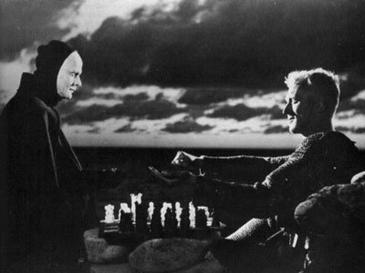
This time of the year, there is just darkness around. We never have sunlight (5 hours in total during November). And there are no lights either. Strangely enough, lots of public places dim their lights down when darkness hits. I don't go to restaurants because I have trouble reading the menu--it is so dark.In general, it feels as if we're playing along with Bengt Ekerot in Ingmar Bergman's Seventh Seal:
If you ever wondered what Bergman's films mean, you haven't spent much time in Sweden
Fortunately, nobody committed suicide this year (as opposed to last year) at the university.

4 December 2014

Jehova's witnesses: finally, they found me!

I've been told that Jehovah's witnesses exist in Uppsala and they do their usual thing: go from door to door, in pairs, trying to convert people. I've been in Sweden for more than 4 years and haven't met a single Jehovah's witness. And finally it happened. Twice in a week.

Last weekend, in the center of Uppsala I saw a bunch of guys distributing some kitsch-looking pamphlets in English and Spanish. I stop for a second and looked. One of them approached me and asked me if I wanted one. What are you, I asked. Jehovah's witnesses, he said. Oh, there they are, I thought. But why in Spanish? Well, there are South Americans in Sweden and we try to get to them. Are you Swedish, I asked. No, Greek, he says, I was born in Athens but lived in Sweden all my life. Do you know about Jehovah's witnesses, he says, in Greek? Sure, I said. Interested? No, thanks, no. I don't like religions, especially those that were established in the US and brought over here, like you, Mormons, Pentecostals, and others. (Not that I like non-US religions, but I felt like saying this to point something out he probably didn't want to acknowledge.) He looked at me puzzled. We're not an American religion, he says. Sure, you are, check your facts. Ok, he says, sure, the first people who thought about the truth were American, but this does not mean that we're an American religion, we've gone everywhere, we're international... We exchange a few friendly sentences in Greek, he asks me about my religion and wish him well and good luck and go.

This morning it happened again. The bell rings. I open the door and two friendly women introduce themselves to me. While doing so, I look at what they were carrying so I saw similar kitsch-looking pamphlets and I guessed... Yes! They were Jehovah's witnesses. Are you interested in.. event... tomorrow.. bla bla... No, no, thank you. Take this leaflet. No, thanks, I won't. Smile. What do you believe in, they ask? Believe? What is "to believe"? I consider the word "belief" something that has to be avoided as much as possible (while, of course, being aware of the impossibility and slight irrationality of the statement I'm making), but, in fact, I don't believe in believing. So we chat for a few minutes. Nice ladies, quite charming, not pushy at all, I felt I could be as pushy as I wanted, but, hell, why should I do that? We talked about the perils of believing, they kept referring to the bible, even though I told them it's not a book that contains uniformly consistent and contradiction-free information, to which they replied (I guess it's one of the things they learn by heart when they receive their training) that it depends on how one reads the book. I gave them a disapproving look so we switched to a different topic. They seemed to be happy with our conversation because, as they said, Swedes typically don't speak to them and that, at least, I had lots to say and that all made sense. It took about 10 minutes of discussion and then they said goodbye and left.

So, am I in the Jehovah's witnesses' friend list now? I don't know. Let's see.. Should I do like the father of someone I know who tells me that he's been inviting Jehovah's witnesses for tea every time they knocked at his door and that, at some point, they wondered "how come, after so many visits, you are still not convinced?" Answer: "oh, because it was me who was trying to convert you." I believe they didn't show up again.

P.S. This posting was discovered by a religious site. Look!

29 November 2014

American priest visits Nordic countries in search of religion!

Recently, an American priest (probably of the creationist type), Marty McLain, from Georgia, US, visited three Nordic countries in search of his quest for god. He summarized his experience very simply, by using a monosyllable word: WOW!!!

Marty McLain’s starting point are his beliefs: “I believe in creation, I believe in the fall, I believe in the garden of Eden, I believe in restauration, I believe in hell, I believe in revelation”, he states clearly.  He also believes we are all born with a sin nature!!! There is no room in his mind for questioning the word belief, which, demonstrably, is something that should be avoided. Admitting that one “believes” in something is neither honourable nor smart and, certainly, not rational. But he has convinced himself that there are some things which should never be questioned. He probably grew up in a (particular version of) Christian environment, so he became Christian, and has convinced himself that this is the best thing in the world, and never questions his beliefs. He believes in everything that his holy book quotes (but does not believe, I’m sure, in the writings of someone else’s holy book). So he came to the Nordic countries assuming that people here also act similarly. Wrong. And when he found out that people don’t care about his beliefs he said WOW!!! And then he said: WOW!!! And then again WOW!!! That’s all he could say. 

The Finnish television YLE made a little documentary on McLain’s visit here:
For a shorter version click here.
I’ll summarize some points.

McLain: Do you believe in god?
Responder A: No. Responder B: No. Responder C: No. Etc….
Responder M:  Of course I do.
McLain: Are you a Christian?
Responder M: No, I’m a Muslim?
McLain: Muslim? WOW!!!

And he keeps asking and asking. Sometimes he gets an answer of the form

Responder X: Yes, I believe.
McLain: Are you from here?
Responder X: No, I’m from the Baltic countries. I’m a Catholic.

He visits Leif Jansson, a humanist, from Jönköping, who tells McLain that Jönköping is the bible belt of Sweden with 13-15% active Christians, as compared to 3% in other areas of Sweden.  McLain asks him about the origins of life. He doesn’t get the answer he likes, so he, unashamedly, states: “I believe that evolution is by faith, because it has not been proven and because there was nobody there to witness it.” McLain is a person of “faith”, so, clearly, there is no room for questioning anything. Leif also states his beliefs (he should know better not to do so—to avoid this word—but anyway): “I believe in science, in humanity, in human rights; I don’t need a god, to put it bluntly”. And McLain gives his favourite reply: WOW!!!

Finally, he finds a Swede who gives him the response he wants.

McLain: Do you believe in god?
Responder H: Eeeeh, yea.
McLain: Are you a Christian?
Responder H: Eh, yea.
McLain:  It’s good to see someone here. I knew it would be at McDonald’s. I knew that if I came to McDonald’s  I’d find someone who believes in god.

(Interesting fact: Sweden has the largest number of McDonalds per capita in Europe and, perhaps, outside the US.)

He goes to Copenhagen and meets with priests (dressed in some funny clothes). He is stunned to realize that the Danish church performs same-sex marriages.  He can't comprehend this. To him, this is alien. “I believe same sex attraction is a sin”, he says.

He then meets with people from the newest religion in Sweden: the church of kopimism. They tell him they believe in filesharing, that this is a religious act. “And what about eternity?” And they tell him that they believe that by uploading their brains they can live forever. “So, are you Christian?”, McLain insists. Reply: “No”. He can’t understand that the Swedish government recognizes anything that has a belief system (and fulfils certain other criteria) as a religion. To him, apparently, religion is something that must be “old”. And, yes, kopimism is an official religion in Sweden

At some point McLain is challenged by someone who asks him if he has a gun. McLain replies he owns a shotgun. Would he use it if there was a burglar? Sure he would, he says, in order to protect his family. And what about turning the other cheek, he is asked. Well, that’s personal, McLain says; when it comes to family, he will shoot. No surprises here. From my experience in Texas, those who have bibles also have guns (and vice versa). Guns in the US are used for everything, including protecting them from the satan. Again, McLain believes in all these things and does not occur to him (or did not occur to him prior to his visit to Nordic countries) that his beliefs are quite conditional and dependent on the fact that he lives in Georgia, US and that his family told him to be a Christian (perhaps indirectly, by the usual means of child indoctrination/abuse).

One hilarious incident is when he visits the Pitäjänmäki church in Helsinki and attends a religious service performed in heavy metal music.
 He is amazed. (I would be too.) He says he doesn’t find the music inappropriate (I would) but, upon insistence of the guy who asks him, he admits that he finds the movements of the people “not godly like”. Why would anyone have heavy metal in a church is another matter—I’d rather not have a church at all—but the fact of the matter is that McLain does not seem to realize that the phenomenon of crazy body motion in churches occur also in the US. Perhaps not in his version of Christianity (he is a Baptist) but in other versions (Pentecostals) people get crazy in churches and move like lunatics

Too bad that McLain did not come to Uppsala where he would find the religion he was looking for. Uppsala has some weird churches, all of them, apparently, “imported” from the US (Livets Ord, Pingstkyrkan, Mormons, Jehova’s witnesses, etc.)  Too bad he didn't realize that there Swedes who find religious signs in fish, just like there are Americans who find religious signs on toasted bread. And just as there are religious killings in the US and elsewhere, so there are in Sweden too. So, McLain, would have found something he likes here.

People in the Nordic countries are, mostly, secular. Nevertheless, they keep the churches for decorative purposes. Actually, many of them have no clue what their churches are for and, for some mysterious reason, some of them keep going to them and perform certain church rituals. McLain finds out that people go to church to get married, etc., but, at the same time, they don't think much about religion. It's just a ritual. Like going to IKEA. (From the point of view of the church, I guess, just like IKEA, it's business.)

29 March 2014

Swedish Nazis

I wrote about the Greek fascists in the past. But the situation in Sweden doesn't seem to be much better. According to a local newspaper, there are several groups of neo-nazis, as well as political parties, which go around causing trouble, from publicly exhibiting fascist symbols, often tatooed on their skin or shaved heads, to organizing demonstrations and distributing propaganda. In 2012, there were 1824 organized public activities by various neo-nazi groups in Sweden, whereas in 2013 the number went up to 2333. Their presence is not equally distributed. For example,according to Aftonbladet (a Swedish tabloid), the number of activities were
Skåne  115
Stockholm  66
Västra Götaland  62
Dalarna  60
Gävleborg 36
Uppsala  34
That means 10 events per month in Skåne, the south of Sweden, and 3 per month here in Uppsala. I have seen the neo-Nazis downtown and I have been told that Greek neo-Nazis have been flown in to show their support. Some of those groups have a very scary ideology.

Neo-Nazi fascistoids are on the rise in many places in Europe, from Ukraine, to Greece, to Sweden. Apparently, they all support one another, and, in some cases, like in Greece, the social situation is such that they have a lot of support. Statistics are not clear in Sweden, but it appears, from the time when Breivik massacred 80 innocent people in Norway, that the numbers are not small at all.


20 March 2014

Alcohol in Sweden

Alcohol in Sweden is very much restricted. There is only one company, Systembolaget, from which one can buy alcohol. And it only opens certain days, excluding Saturday afternoons and Sundays. Also, their prices are extremely high and the selection limited in quantity and in quality (which is to be expected if there is a monopoly). I'm being told that things are good now because, in the not-so-distant past, that company was allowed to be open only one day per week, resulting in huge queues consisting of people taking time off work in order to buy their wine.

The company claims that the only reason they exist is because they care about people's health and they have conducted scientific researches to show that if the monopoly seized to exist then catastrophic things would occur. They present their case here in flash form. The page contains the whole scientific report too. Here are some of the "catastrophic" consequences that would result if the monopoly seized to exist. (Images are captures from their page.)
So? What's wrong in being able to buy alcohol in more places? And what's wrong in buying wine where I buy my food? I DO want both of them. But, according to Systembolaget, these are among the dire consequences of abolishing the monopoly. Totally absurd, isn't it?

In another place, they claim that
They don't explain, but, presumably they mean deaths occurring by drunk drivers. So, I suppose, they care about maintaining safety on the road. This is good. I am all for that. However, it's not entirely right that they care about safety. To wit, of all the countries I know, Sweden is the only one where you can drive your car and speak on your cell phone at the same time. It's ok for drivers to chat, text, whatever. It's funny how such an obviously dangerous activity is legal, while, at the same time, consumption of half a bottle of beer will get you into trouble while driving because the alcohol limit is zero. Although I'm not an expert in these things, I maintain that speaking on the cell phone, like many idiots around, is far more dangerous than having drank half a bottle of beer. This is, then, dishonesty.


1 March 2014

Holy fish

Talking about animals, and having read this about fish, I remembered last September's story about the holy Swedish salmon or Jesus fish, as it was baptized.
Holy Swedish Salmon
A fisherman in Gothenburg caught this salmon and started shouting out of religious joy. A certain Mr Ludwigson was summoned and verified the holiness of the fish: "I've been in this business for 30 years and have never seen anything like it." The salmon was initially scheduled for a holy supper. But then this was deemed a sacrilege. So a tour of it was planned. First in Malmö were it was put on display in the supermarket. Then in Gothenburg for public viewing at the Nordstan shopping center. I don't know what happened after that.

Swedes are supposed not to be too religious. But, especially in Uppsala, there are many fundametalist Christians, e.g., pentecostals, and mormons and what have you. Once in a while, they appear at the center of town and if you happen to pass by you feel like you're in a bible belt. They preach and shout and try to convert and proselytize and so on. Once in a while you also find some crazy religious acts too. The worst of those fundamentalist Christians are in par with their American peers. In fact, they are the same. This is religion imported to Sweden from the Bible belt.

What's next in the holy fish business? The Atlantic flounder is commonly known as Helgeflundra in Swedish (i.e., Holy Flounder). Despite its name, there is no known report of it appearing with a holy sign. Perhaps it'll come next. This is my prophesy.


21 March 2013

Swedish pedestrian crossing signs: an update

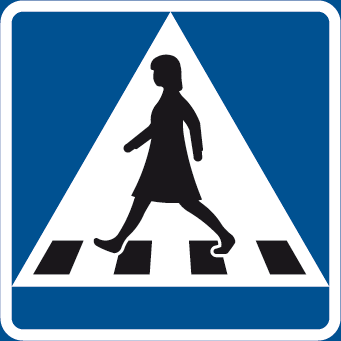
Ever since I posted my famous Swedish pedestrian crossing signs post on this blog, pointing out that a major step towards gender equality was taken by converting several pedestrian crossing signs in Uppsala (and elsewere in Sweden) from male to female, there has been further progress to reflect the diversification of gender. Here are some examples from various locations in Uppsala.
The original sign. It still exists.
Some original ones were replaced by this,
but they were soon removed as being too
sexually explicit.
The previous ones were replaced by this,
which is modest and decent.
Appeared several months ago in front
of Carolina Rediviva.
Appeared several months ago in front
of Carolina Rediviva.
A new sign.
An even newer one.

Still, a lot of work remains to be done, but the above steps clearly reflect progress.
 

24 February 2013

EU sues Sweden over environmental 'inaction'

A couple of days ago, I read that the EU will take Sweden to court for repeatedly ignoring an order to regulate its industrial sites. The warning was given to Sweden in 2007.

Now, this is a total surprise for me.

In Sweden, everybody is so environmentally cautious! The people, the government, the schools, every institution... Even at fast food places, like MaxBurgers, you select your hamburger based on two pieces of information: (1) nutrition--KJoules (or calories) and fat content, (2) how much CO2 was used for its production. We recycle in 10 different categories in my neighborhood. We never throw a single piece of garbage in the wrong bin. Buses are coloured green because they proudly run on environmental-friendly fuel. People use bikes rather than cars, one reason being they care about the environment. We are told that, if we have the option, to heat up the car electrically when parked outside in the snow because starting on a cold engine is bad for the environment. We pay more for many things because we care about the environment. The environment comes first. Everything else comes second.

So, I was taken aback when I read that EU is suing Sweden over environmental issues. It's like suing the Pope for not being a good Christian. But The Local is not an untrustworthy source of news, so I accept that this is the case. In fact, the rest of the article also mentions that EU is taking Greece (and the UK) to court for environmental issues. No surprise here! This is totally in par with my experience.

The conclusion is that, despite appearances, despite the promise of "environmental paradise" in Sweden (as advocated by everyone, the government, the industry, etc.), one should be cautious about taking the "obvious" as true. Apparently, there are forces in Sweden which do not care about the environment and which, for some reason, have not been noticed or punished by the government.

I will not stop recycling every little piece of paper, but I will, from now on, be aware of the fact that, perhaps, even if I recycle everything for the rest of my life, the good I'm doing to the environment may not be equal to the damage done to it, in a single day, by a misbehaving factory farting nasty gases into the atmosphere. And I will have to take big words like "the overall goal of the Government's environmental policy is to hand on to the next generation a society in which the major environmental problems facing Sweden have been solved" with a grain of salt.

5 December 2012

Corruption index

I just read, via BBC, the existence of an indicator of a country's corruption, called corruption perceptions index, created by an organization called Transparency International (TI). Now, although I don't like single numbers for quality control, and although I have no opinion about this organization's methods and ethos, some of the numbers in their report seem to correspond to common sense:
Worldwide, Denmark, Finland [, New Zealand] and Sweden were seen as the least corrupt nations, while Afghanistan, North Korea and Somalia were perceived to be the most corrupt.
No surprises here. Also,
Greece [is the] 'most corrupt' EU country.
Again, this is not a surprise.

What I found rather surprising is the relatively good ranking of Bhutan, Uruguay, Chile and Botswana. Uruguay has a very interesting character as president, José Mujica, who is the world's poorest president, living a very simple life in a farm. In the case of Botswana, perhaps in the character of Precious Ramotswe we see a reflection of reality.

Another thing that is worth asking is this: the perception that Greek governments were corrupt is not new. In fact, I have a hunch that EU did know that Greece was corrupt all along and that the surprise they showed when it was revealed that Greece was faking its balance sheets was not honest. It was, simply, mutually convenient for corrupt Greek fovernment to fake its balance sheets (with the help of Wall Street companies) and for EU to accept them at face value. Convenient, as long as the shit hadn't hit the fan yet.

Also, it is nice to know that I live in the number 4, according to the report, least corrupt country (and hope they clean the roads soon, because the snow doesn't seem to stop falling).

Finally, and rather obviously,
TI believes there are strong correlations between poverty, conflict and perceived levels of corruption.

3 November 2012

Parapsychology and telepathy (and related bogus science)

Every year, in English-speaking countries alone, more than a hundred books that promote the wildest forms of bogus science and the paranormal are published. The percentage of Americans today who take astrology seriously is larger than the percentage of people who did so in the Middle Ages
writes Martin Gardner, in his foreword for the book How to Think About Weird Things: Critical Thinking for a New Age, by Theodore Schick and Lewis Vaughn, concluding that
[the book will perform] a service that our technologically advanced but retarded nation desperately needs.
He is referring to the Unites States where 79% of people believe in miracles, 75% in the paranormal, 18% in ghosts (the number doubled in a decade), and many many other weird and stupid things.

But the phenomenon of retardation is observed in non-English speaking countries as well. Today, a colleague pointed out to me that a Swedish university has established a chair in the field of ... parapsychology and telepathy! Long ago, a rich Danish guy, called Poul Thorsen, wrote a book (Die Hypnose in Dienste der Menschheit, Bauer-Verlag, Freiburg-Haslach, 1960) on how to use hypnosis to have your way with women and left some money for a chair in parapsychology and hypnology. 40 years after his death, the chair was finally established.

Parapsychology is not a science, not a discipline, it is nothing. It is just a bogus, empty field. It is concerned with something called "psi", which nobody knows what it is. Nevertheless, parapsychologists are interested in demonstrating that psi exists (without knowing what it is). Pure baloney, of course.

Another ex-scientist dealing with the field of parapsychology is Brian Josephson, emeritus professor at Cambridge, who, in 1973, received the Nobel prize for the discovery of the Josephson effect. The latter has nothing to do with parapsychology. It is real science, and deals with superconductivity. It is an example of a macroscopic quantum phenomenon. But, somehow, Josephson flipped out and later devoted his life to psi and telepathy and what have you. "Utter rubbish", physicist David Deutsch declared when, a decade ago, the UK Royal Mail accepted a text by Josephson (to accompany a set of stamps commemorating the Nobel prize). The text by Josephson, stated that quantum mechanics may be the explanation of processes still not understood within conventional science such as telepathy, an area where Britain is at the forefront of research.

Well, parapsychology is now in Sweden too. In the UK nobody took Josephson seriously. But are there people taking parapsychology, psi, telepathy, the paranormal, etc, seriously in Sweden? How many? Sweden, supposedly, is not a religious country. But could it be that superstition is widespread? I don't know the answer.


T H E B O T T O M L I N E

What measure theory is about

It's about counting, but when things get too large.
Put otherwise, it's about addition of positive numbers, but when these numbers are far too many.

The principle of dynamic programming

max_{x,y} [f(x) + g(x,y)] = max_x [f(x) + max_y g(x,y)]

The bottom line

Nuestras horas son minutos cuando esperamos saber y siglos cuando sabemos lo que se puede aprender.
(Our hours are minutes when we wait to learn and centuries when we know what is to be learnt.) --António Machado

Αγεωμέτρητος μηδείς εισίτω.
(Those who do not know geometry may not enter.) --Plato

Sapere Aude! Habe Muth, dich deines eigenen Verstandes zu bedienen!
(Dare to know! Have courage to use your own reason!) --Kant